
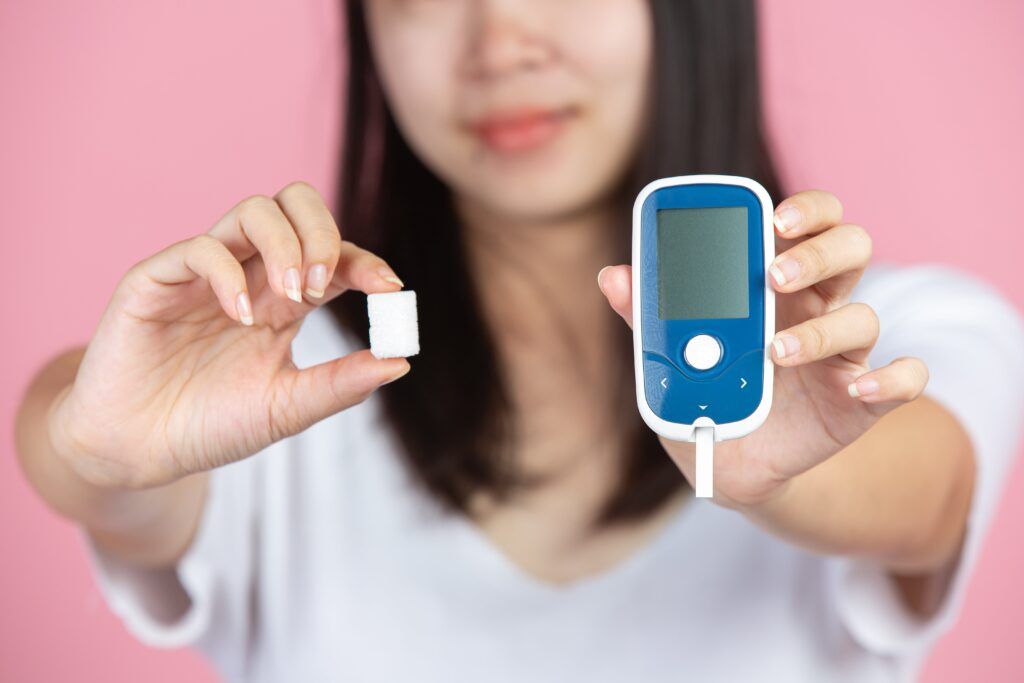
As you may have already seen in the shop, we offer candies and snacks in reduced-sugar form. However, since not every product is automatically suitable for diabetics, we will show you in this post what to look out for and which products or sugar substitutes are suitable for you. Because no one has to give up sweets with us!
In many of our offered foods, sugar is replaced by so-called sugar alcohols such as Maltitol (E 965), Xylitol (E 967), and Erythritol (E 968). However, this has nothing to do with regular alcohol as we know it; it is merely the chemical designation of these substitutes.
Why sugar alcohols are suitable for diabetics is explained here: They have no effect on blood sugar levels and are excreted undigested or independently of insulin. It should be noted that the products still contain calories and sometimes carbohydrates, so the ingredient list should definitely be checked before consumption!
Here you will find a list of some products from the shop that are suitable for you due to the use of sugar alcohols:
Maltitol
Maltitol is produced by the hydrogenation of maltose. Maltose is also known as malt sugar, which is a breakdown product of starch. It belongs to the group of polyols, meaning the sugar alcohol is derived from fruits.
Maltitol has about half the calories of regular table sugar, which is 240 kilocalories per 100g. Regular table sugar contains 400 kilocalories per 100g.
Products from the shop:
- RED Hazelnut and Macadamia Milk Chocolate
- RED Orange and Almond Dark Chocolate
- RED Blonde Caramelized White Chocolate
- RED Pralines with Nut Filling
- RED Hazelnut Cream
- De Bron Pokerfruit
- De Bron Cola Gums
- De Bron Cherry Gums
Xylitol
Xylitol is a sugar substitute that is also known as birch sugar, as it was originally derived from the bark of the birch tree. Nowadays, it is mainly obtained from various berries and fruits, but due to its chemical processing, it cannot be referred to as a natural sugar substitute. Since xylitol is an intermediate product of carbohydrate metabolism, it also occurs in human tissue. It contains about 240 kilocalories per 100g, which is about half as much as regular table sugar.
Products from the shop:
Erythritol
Erythritol is also classified as a sugar alcohol, whose chemical compounds taste sweet but are not metabolized like regular table sugar. Erythritol is obtained through fermentation, e.g., from glucose. Regarding calories, it can be said that there are about 20 kilocalories per 100g of erythritol. Here, too, there is a significant difference compared to table sugar.
Products from the shop:
Share